
Nursery Rhymes I Feel Uncomfortable Teaching My Baby
Nursery Rhymes I Feel Uncomfortable Teaching My Baby
Well, things have changed a lot.
Until a year ago — and even throughout my own childhood — I could sing a nursery rhyme without ever stopping to think about its meaning. The words flowed naturally, and I never felt uncomfortable about what I was actually singing.
But ever since I became a mother, I chew over every word before singing it out loud to my daughter. I think about it, question it, and sometimes even sieve through the lyrics before putting them in front of her.
Not because my taste has changed.
I think it is because I have become that protective mother who wants only good things for her baby. Now, even the simplest nursery rhyme makes me pause and ask myself: What exactly am I teaching her through these words?
And surprisingly, some of the rhymes I grew up singing don’t feel quite the same anymore.
I’m not saying these rhymes are necessarily harmful to children. I simply find some of them uncomfortable enough to question whether I want to pass them on unchanged.
Here are a few that made me pause.
1. Chubby Cheeks, Dimple Chin
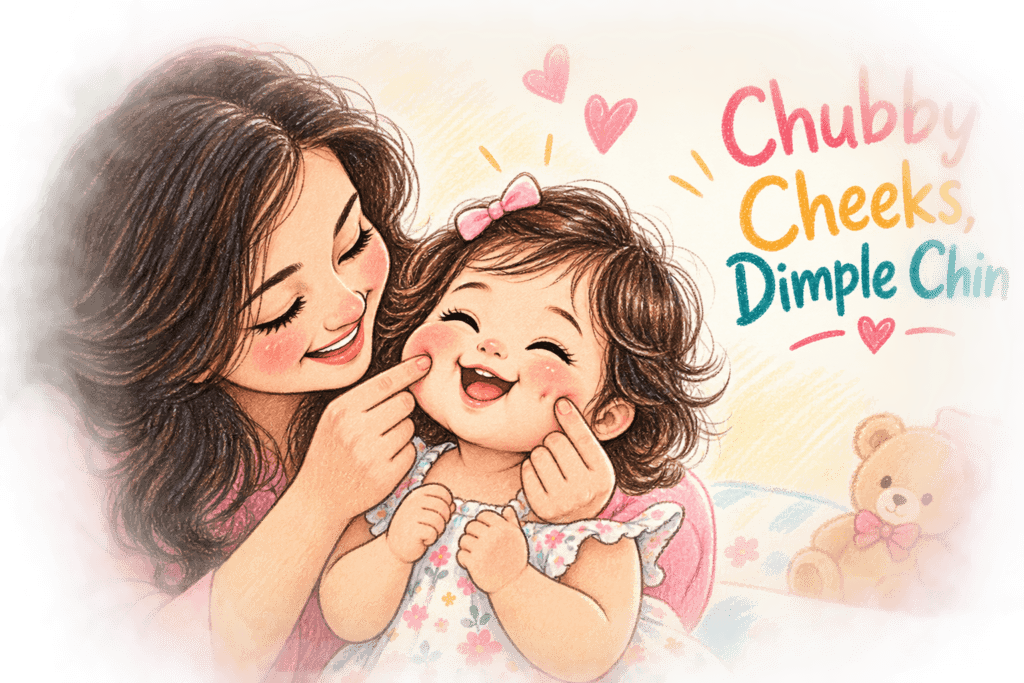
This rhyme describes a beautiful child through features such as chubby cheeks, dimples, rosy lips, curly hair and blue eyes.
There’s nothing wrong with these features, but I don’t love the idea of presenting one particular appearance as the picture of beauty. I want my baby to see beauty in dark skin, dark lips, straight hair, curly hair, brown eyes, big eyes, small eyes, and every other beautiful feature that makes us different.
So, when a rhyme describes beauty in a very specific way, I often tweak the words to make them more inclusive.
2. What Are Little Boys Made Of?
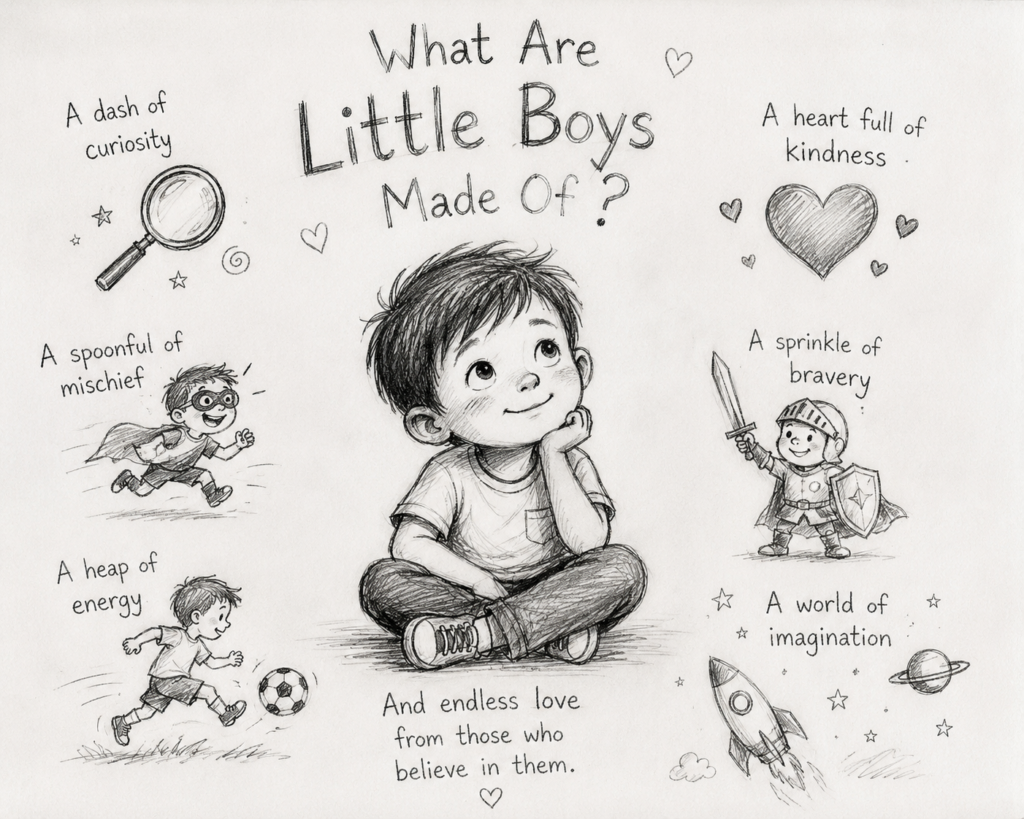
Boys are described as being made of “snips and snails and puppy-dog tails,” while girls are made of “sugar and spice and everything nice.”
It reinforces a very traditional idea that boys are rough and mischievous while girls are sweet and well-behaved.
I want my baby to grow up knowing that girls are in no way lesser than boys. Apart from physical differences, I want her to believe that her possibilities are just as limitless as a boy’s.
3. Georgie Porgie
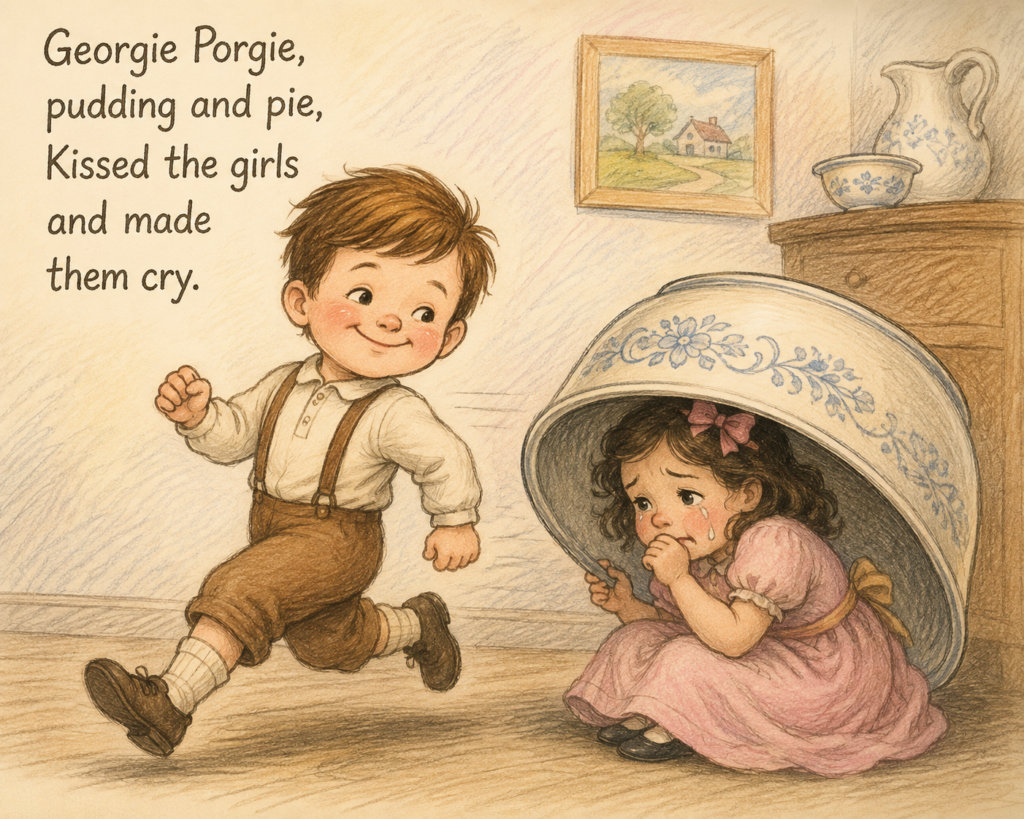
“Kissed the girls and made them cry.”
The rhyme treats unwanted kissing as something amusing. Today, we try to teach children that affection requires boundaries and consent, so this lyric doesn’t sit comfortably with me.
Man, I’m super careful about singing songs like this to her. In fact, I often avoid them altogether. I want her to grow up understanding boundaries — her own and those of others. She should know that affection is never something to be forced, and that making someone uncomfortable isn’t something to laugh about.
4. Ten Little Indians
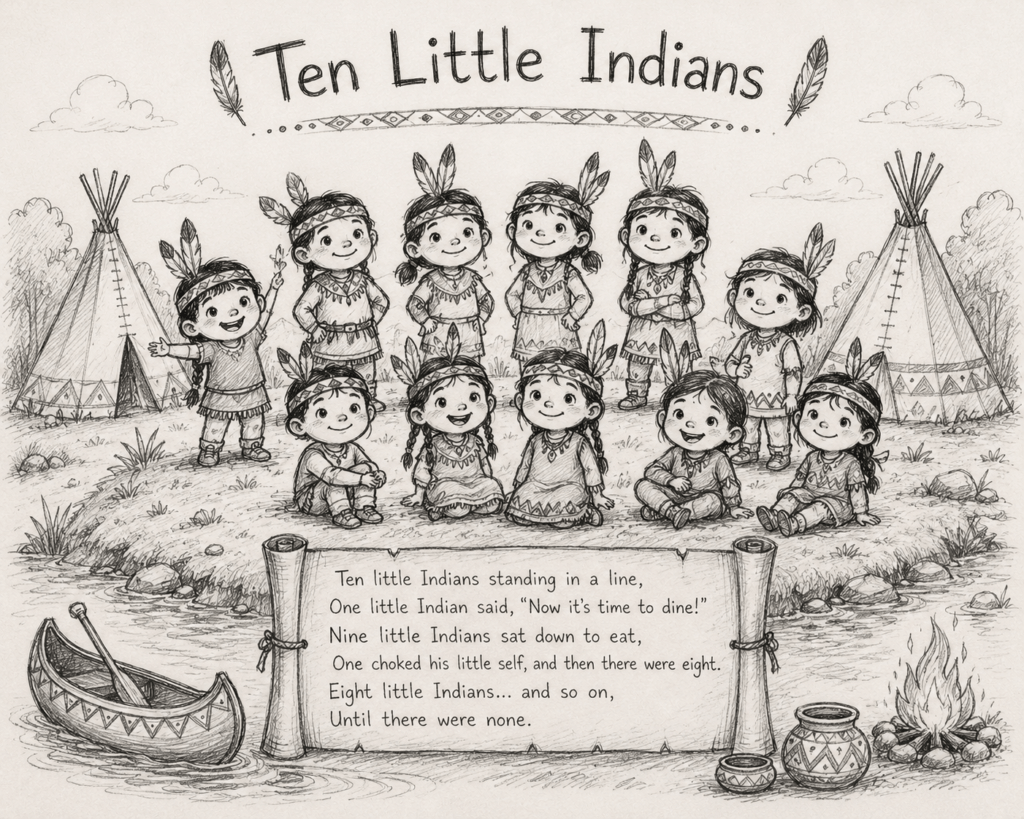
The traditional version uses a term for Indigenous people that is now considered outdated and inappropriate.
There are plenty of modern alternatives for teaching children to count without using language that can be offensive.
5. Rock-a-bye Baby
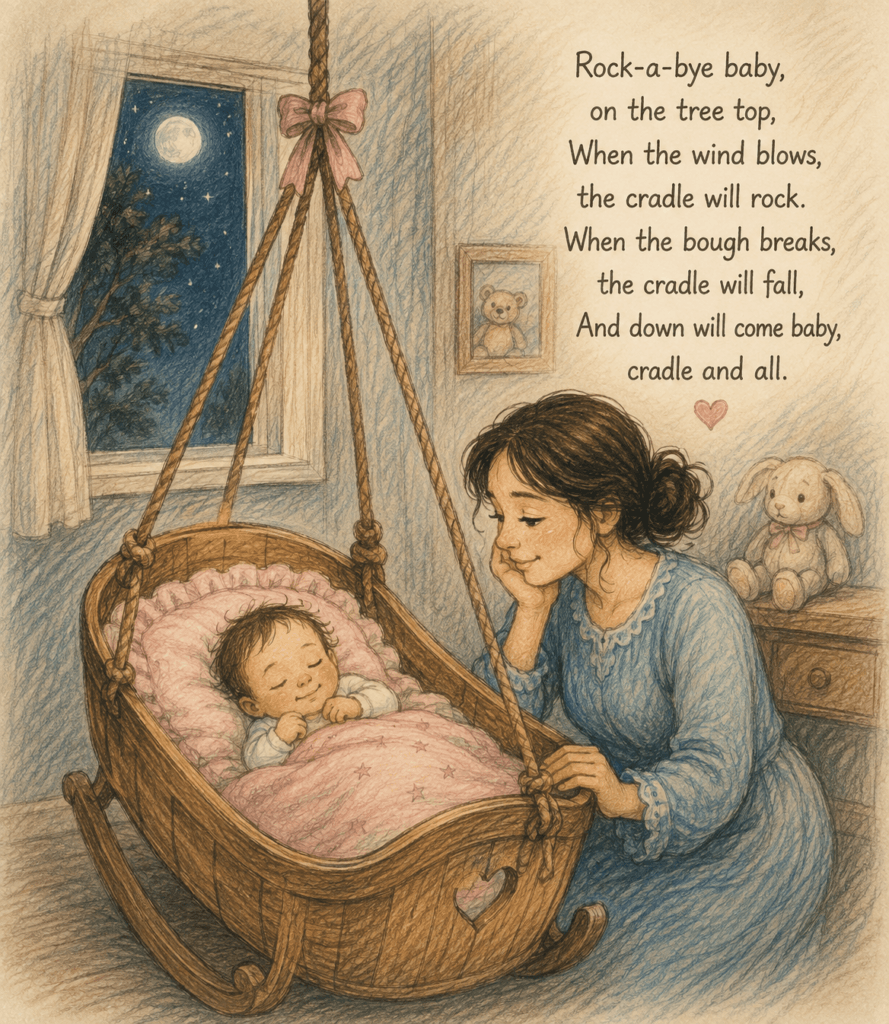
A baby is rocked in a cradle hanging from a tree, before the cradle eventually falls.
We’ve made this into a soothing lullaby, but when I actually picture the lyrics, the imagery is surprisingly unsettling.
6. Three Blind Mice
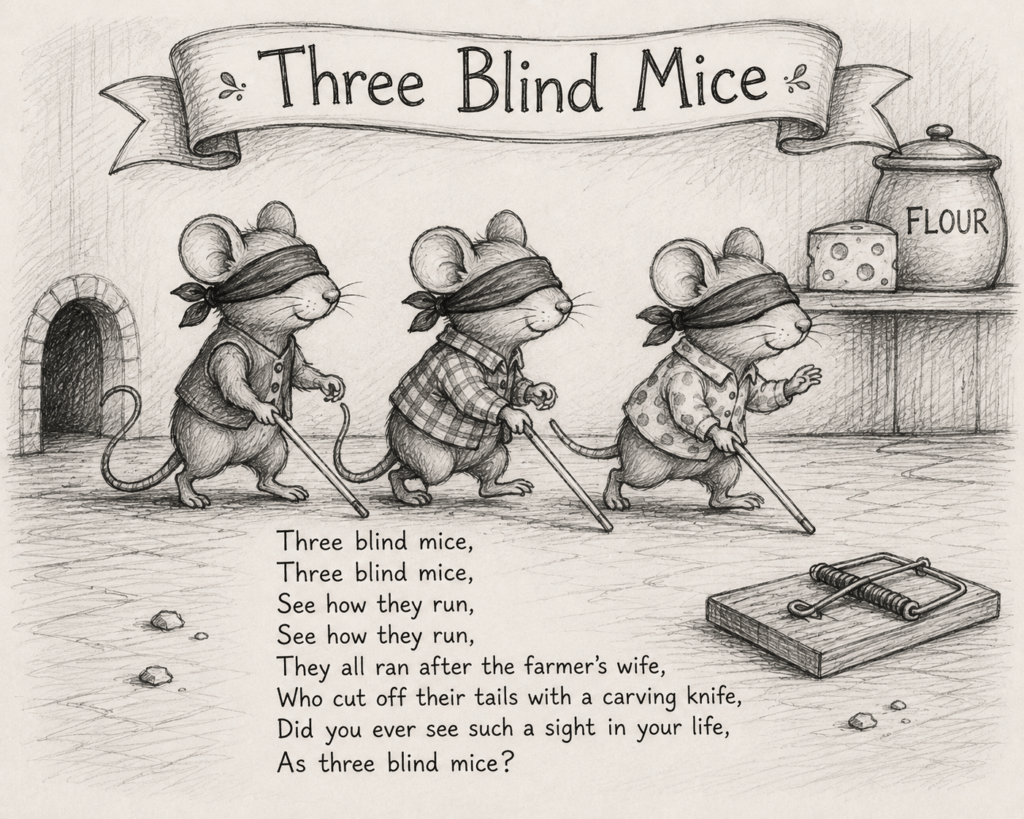
Three mice are chased and have their tails cut off.
It’s a catchy counting rhyme, but underneath the cheerful tune is a surprisingly violent story.
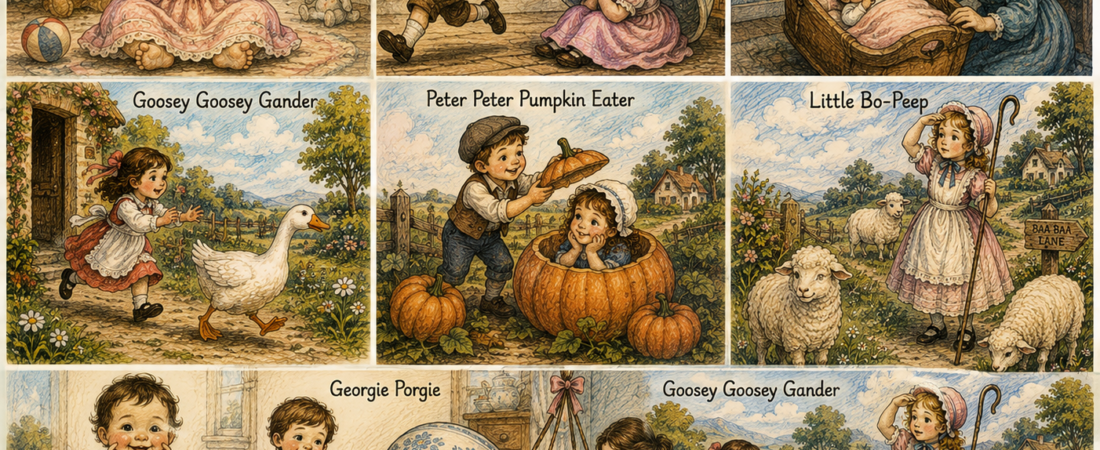
7. Goosey Goosey Gander
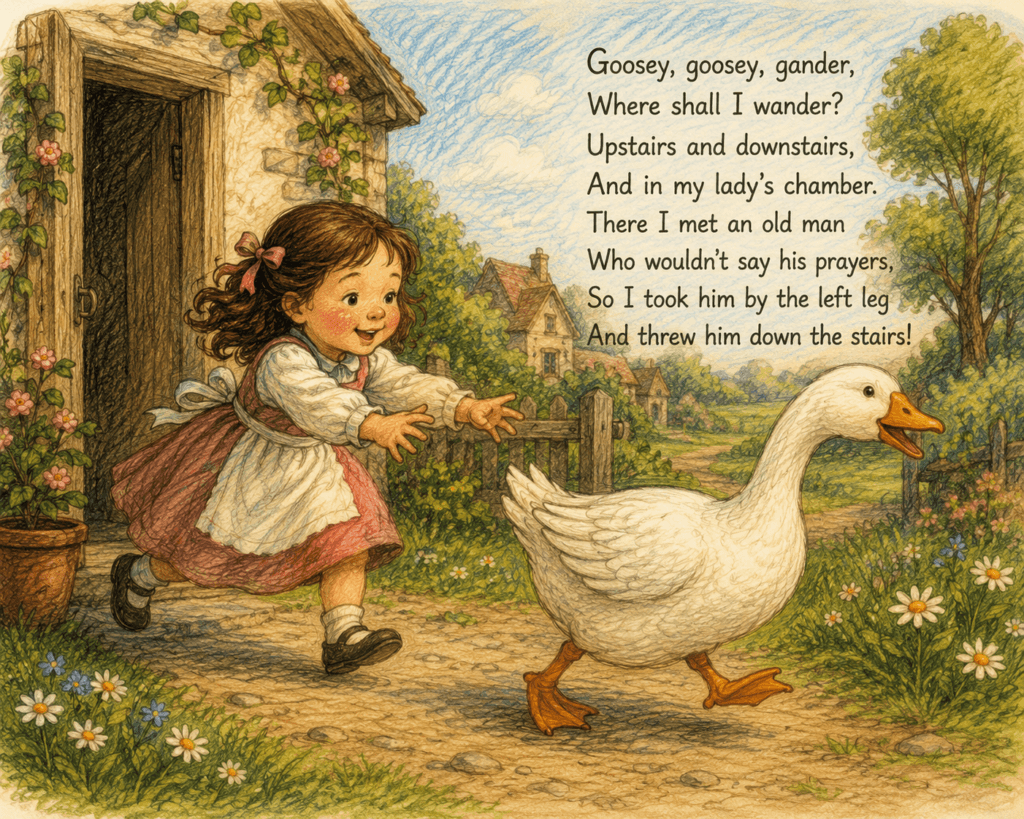
The rhyme includes the line about throwing someone “down the stairs.”
It’s another example of violent imagery appearing in something traditionally presented as a harmless children’s rhyme.
8. There Was an Old Woman Who Lived in a Shoe
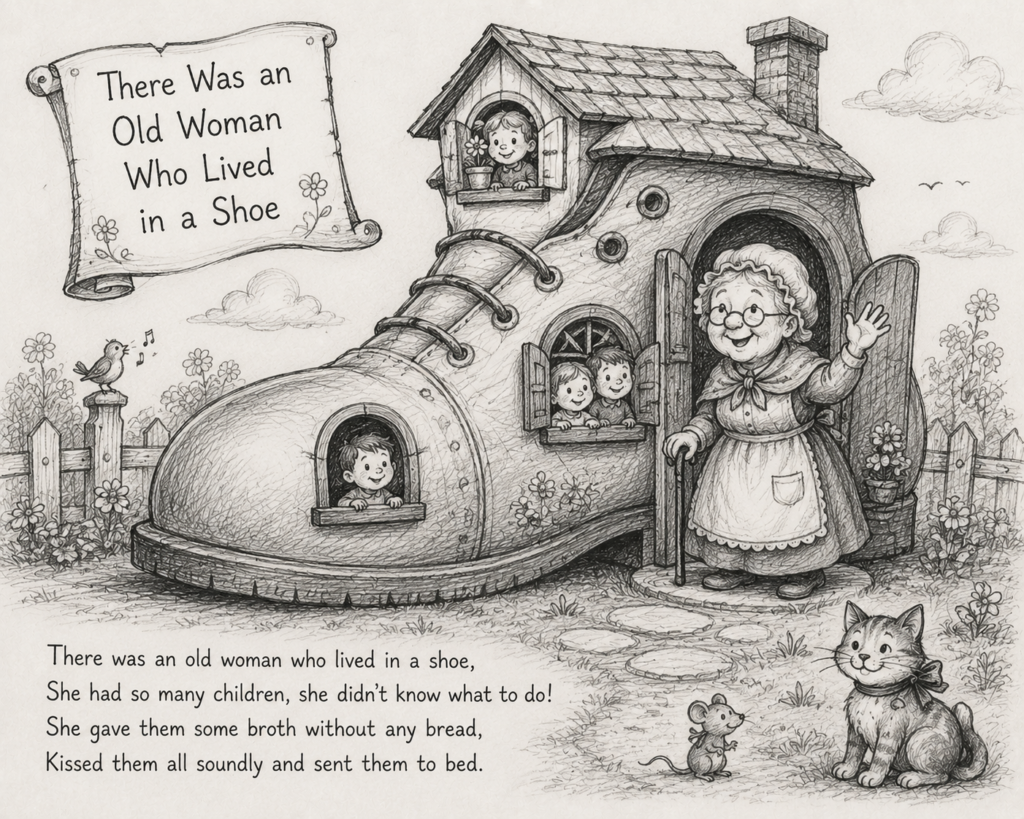
This one simply doesn’t sit right with me. A woman has so many children that she doesn’t know what to do with them and eventually puts them to bed without food.
I don’t see anything particularly meaningful or positive for my daughter to take from that story. So, unlike some of the other rhymes, I simply skip this one.
9. Peter Peter Pumpkin Eater
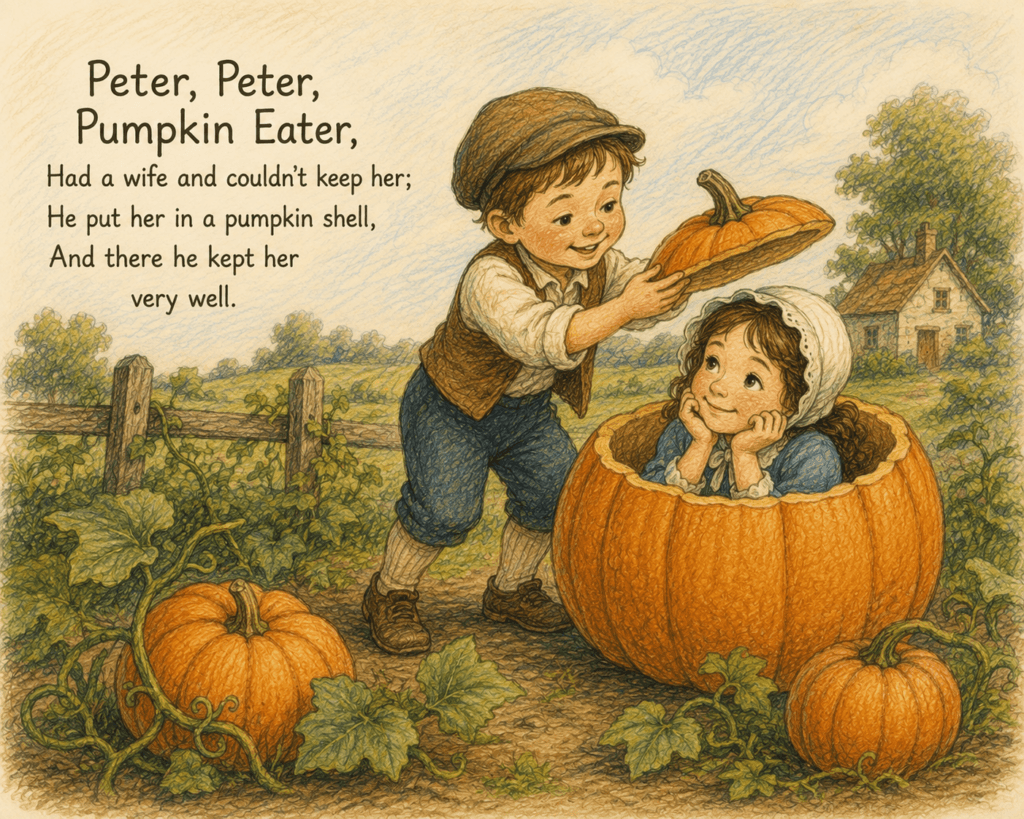
Peter supposedly puts his wife inside a pumpkin shell because he cannot keep her.
The idea of a husband literally containing his wife is rather uncomfortable when viewed through a modern lens.
Songs and stories we hear during our formative years can have an impact on how our character is shaped. We may not consciously notice it, but certain ideas can unknowingly seep into our thinking. I don’t want my daughter growing up absorbing patriarchal ideas of domination or the notion that a woman should be controlled or contained by a man, even through something as seemingly innocent as a nursery rhyme.
10. Monday’s Child
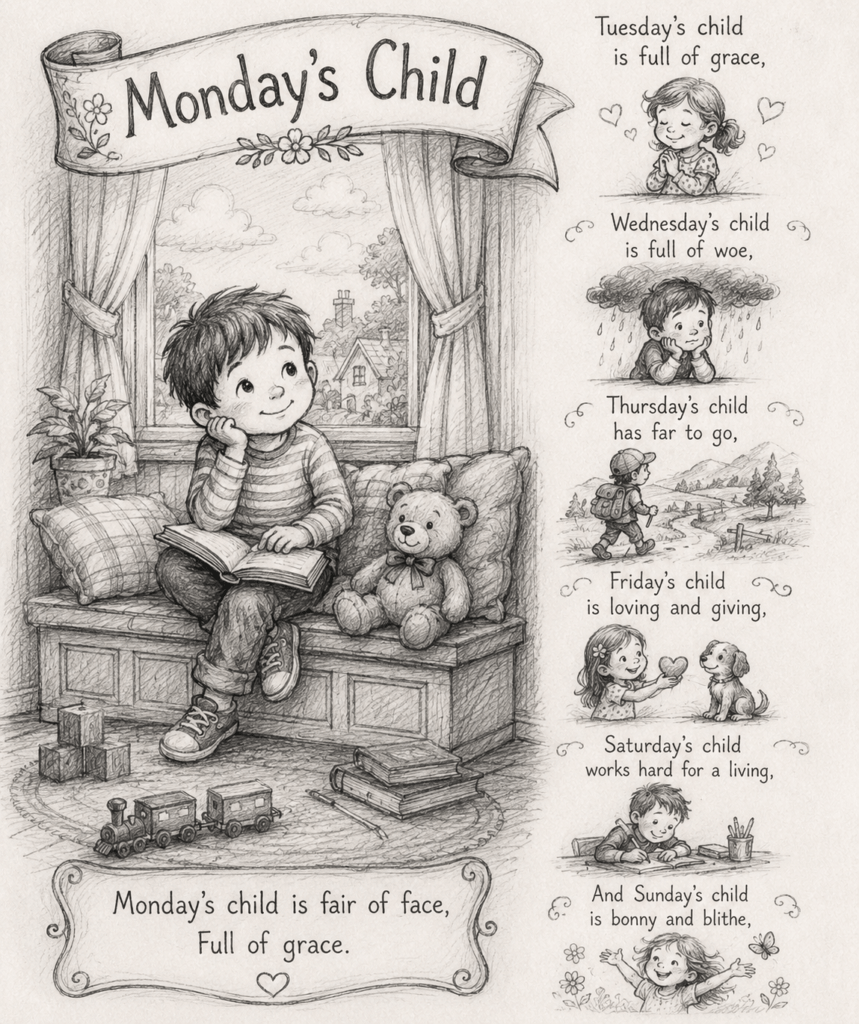
This rhyme assigns personality or characteristics to children according to the day they were born.
It’s harmless fun, but I find the idea that a child’s personality or destiny is predetermined by their birth day outdated.
I already struggle with being immune to superstitious beliefs, and I don’t want my child growing up believing that one day is better or luckier than another. Every day is good, and every day comes with its own opportunities. I want her to believe that what she makes of a day matters more than the day she was born on.
11. Little Bo-Peep
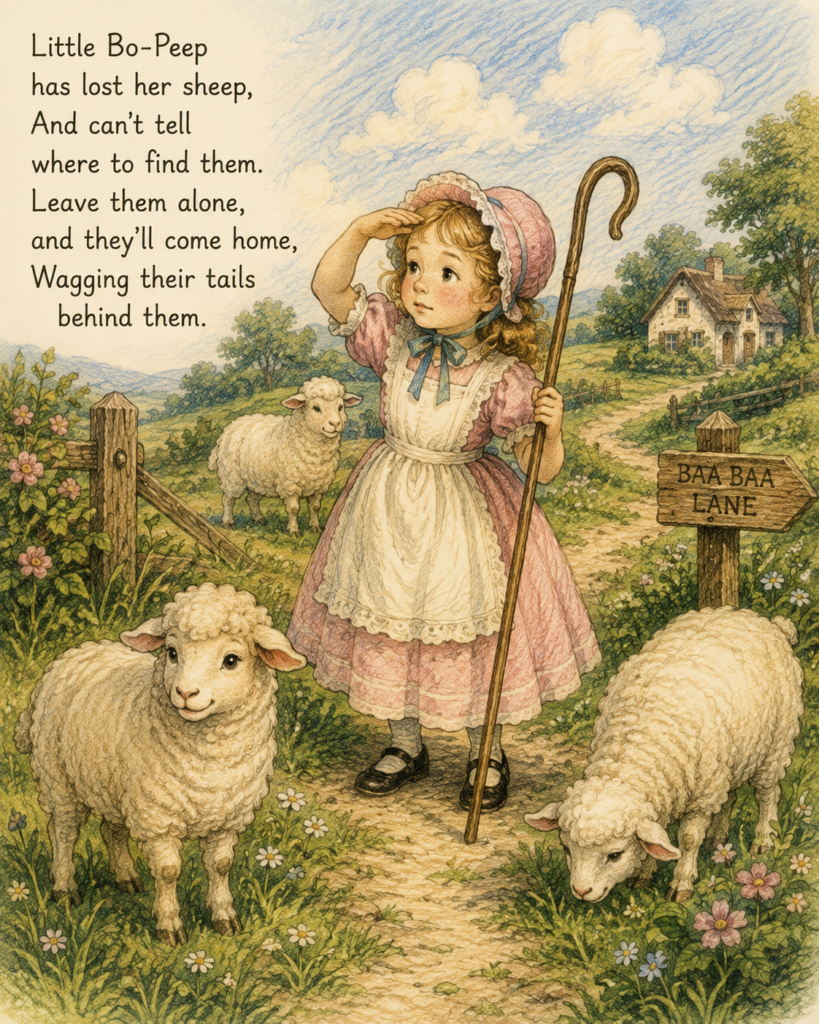
Little Bo-Peep loses her sheep and is told to leave them alone until they come home.
It’s not particularly disturbing, but it is another old rhyme whose storyline becomes rather strange when you actually stop to think about it.
12. This Old Man
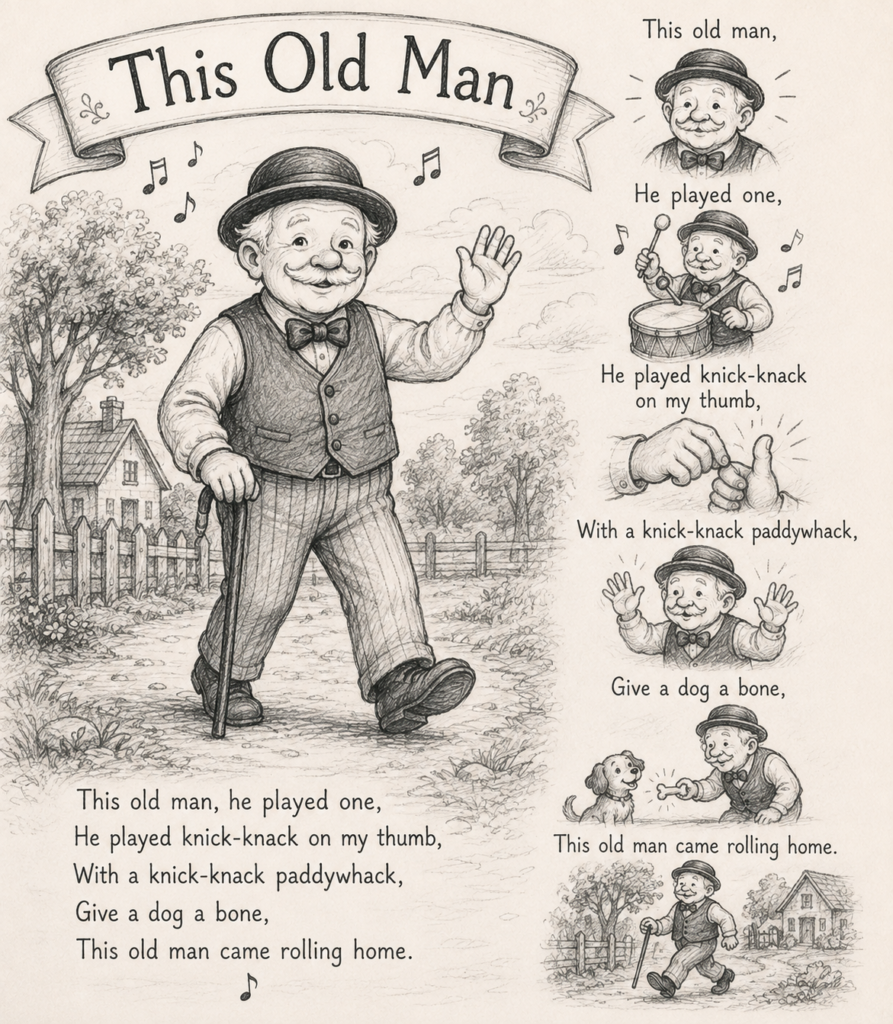
“Knick-knack paddywhack, give a dog a bone.”
It’s one of those rhymes I’ve sung many times without ever asking what “knick-knack paddywhack” actually means.
It’s not unsafe or offensive. It’s simply a reminder that some nursery rhymes have survived for generations even though their words and meanings are barely understood today.
I feel the “Knick-knack paddywhack” song is a bit unsafe. Maybe I’m being a bit psychic here, but that’s honestly how I feel. With everything happening around us, I simply don’t sing that song to my daughter at all. And it’s not just because the lyrics seem meaningless or because I don’t understand what the words actually mean. Something about the song just doesn’t feel right to me, and as a mother, I’m comfortable trusting that feeling.
Simply my choice as a mother
Nursery rhymes are part of childhood, and many have value for language, rhythm, memory and play. Children also don’t necessarily interpret lyrics the way adults do.
But I think parents can choose what they want to pass on.
We can change a word, skip a verse or choose a different song without feeling guilty about it. I hear the little messages hidden inside the words — and I get to decide which ones I want her to grow up hearing.

Leave a Reply