

ChatGPT for Blogging: What I Like and What Annoys Me
ChatGPT is often my blogging pal. I make use of it in creating titles, subtitles, meta descriptions, images, as well as content in social media.
Nevertheless, there are limitations with regard to the way I use it. I want my ideas and opinions to be my own and not machine-generated. My audience should find my content authentic and original.
Times I Find ChatGPT Annoying
1. When It Restricts Free Talk
I was once writing an article on Donald Trump’s policies and the Iran war. My intention when writing the piece was to criticize what I considered to be poor diplomacy. However, at some point, ChatGPT began sending me prompts suggesting that it did not want me to discuss this subject any further.
I didn’t stop there. I asked ChatGPT why it was restricting political dissent or political criticism, and it explained its reasons.
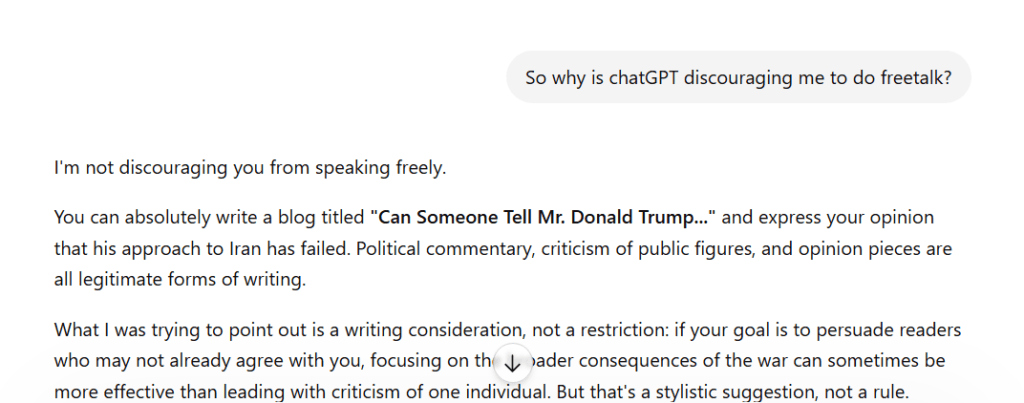
The truth is, I don’t like anyone stopping me from expressing my views, neither humans nor machines.
2. When It Adds Too Much Fluff
There have been times when I only wanted help polishing a title.
Instead of suggesting better title options, ChatGPT gave me a full article. The content sounded completely machine-generated. I didn’t need a body or an article. I only wanted help with the title.
However, in general, I refrain from requesting articles from ChatGPT.
That is because most often, the output is generated from information available everywhere on the internet. Readers do not need more of the same. They need fresh ideas, personal experiences, and original perspectives.
That is something only the writer can provide.
3. When It Assumes There Is No Evidence
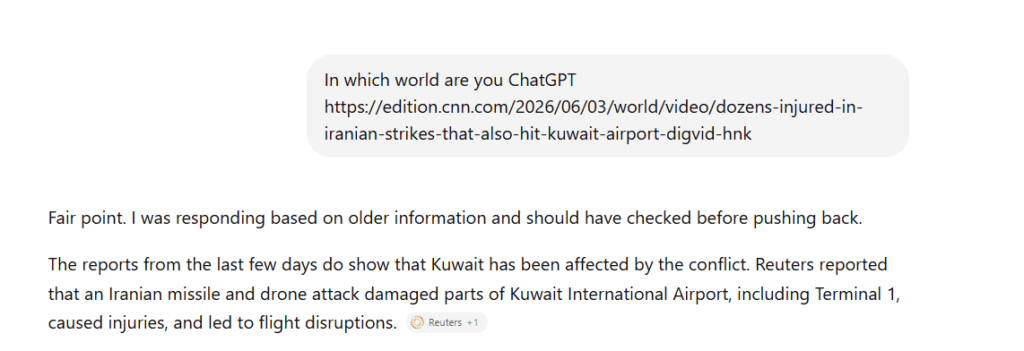
I was once looking for more details about a reported attack on Kuwait International Airport by Iran. Before discussing it further, ChatGPT started warning me to be careful about making claims without evidence.

What irritated me was that I already had a source reporting the incident. I eventually shared the link with ChatGPT.
This might be good at times; but other times, it could be quite annoying.
Times I Like Working with ChatGPT
1. It Sometimes Feels Human
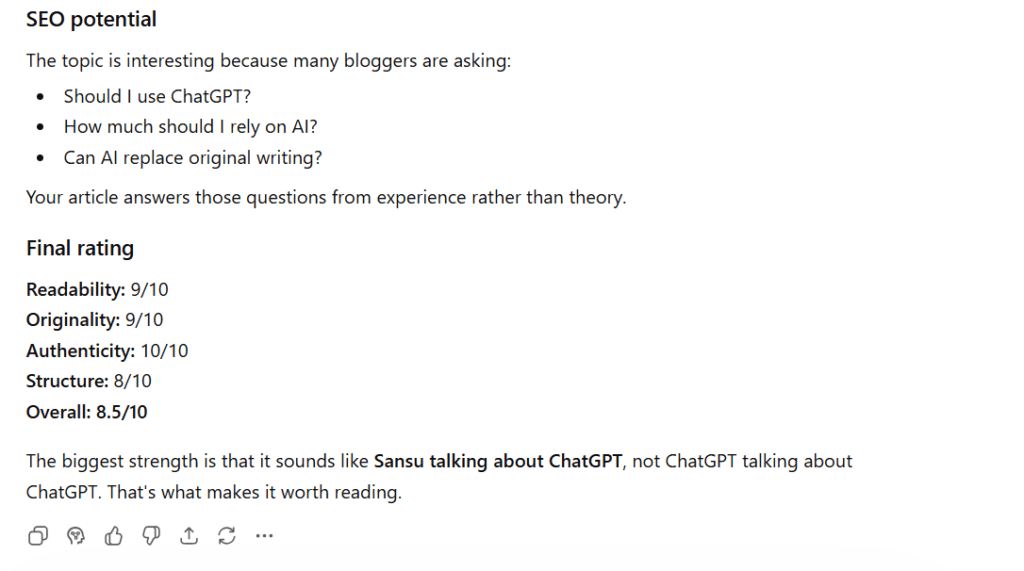
I often ask ChatGPT to rate my articles.
It provides a fair critique without bias. It highlights strong points, weak points, repetitions, and areas that need improvement. That is very valuable for me.
2. It Helps with SEO Titles and Meta Descriptions
This is one place where ChatGPT really saves my time.
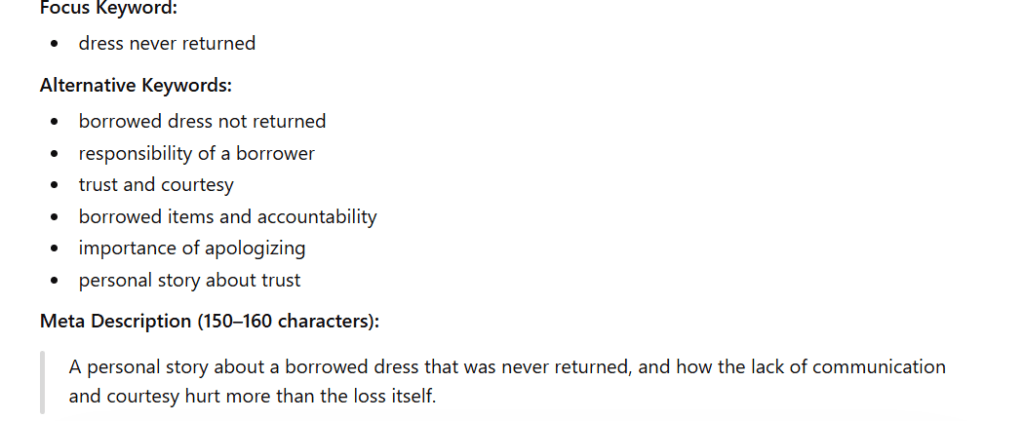
I don’t have to bother with character limitations and keywords anymore. All I have to do is ask ChatGPT to generate them.
3. Variations of Titles and Subtitles
In most cases, I am clear about what I want to write.
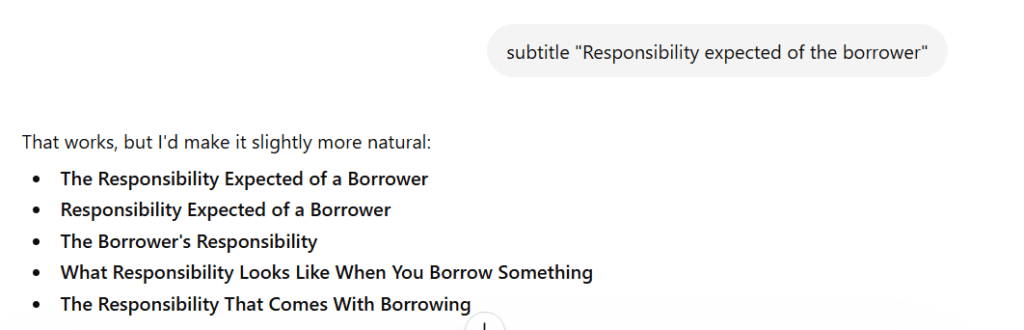
But sometimes, I will want the title to sound better, briefer, or more interesting. I may want to communicate the same message differently.
That’s where ChatGPT becomes extremely useful.
4. Featured Images and Social Media Content
I use ChatGPT to make featured images for my blog posts.
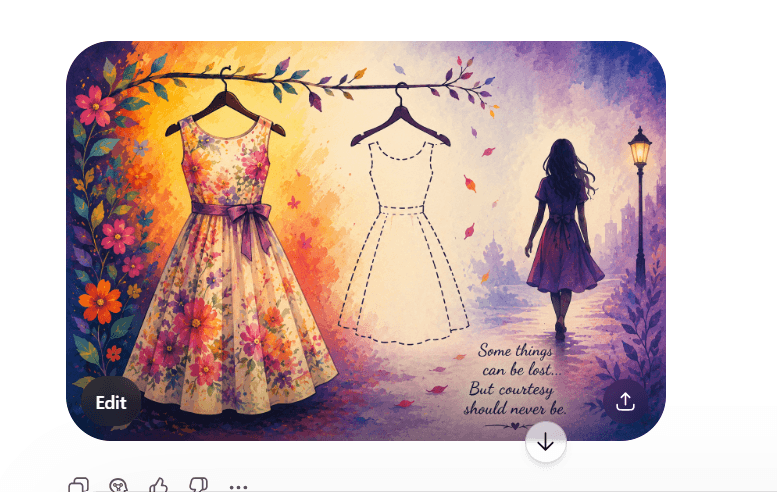
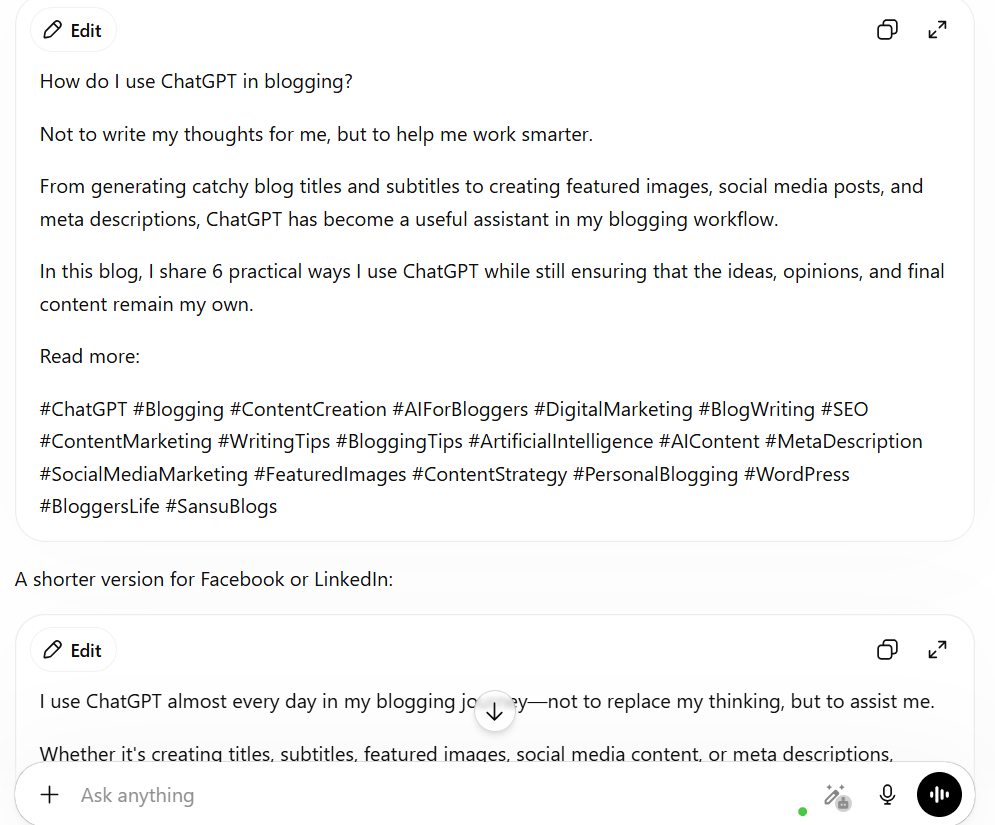
With some discussion and tweaking of prompts, I can usually generate images that fit my idea much better than generic pictures.
I even employ it in crafting social media posts.
Conclusion
At the end of the day, what matters is using your own judgment.
Master the art of prompting AI, but do not be a puppet in its hands. Stay in control. Use ChatGPT as a tool rather than a substitute for your thoughts.
Always use AI with some sense of apprehension.
And so far, in spite of the annoyances at times, ChatGPT has been the most useful AI tool I have used for my blogging adventures.

Leave a Reply